
Home / Signing for it
Signing for an Oopbuy parcel: what the signature ends
Oopbuy treats a normal signature as the end of the whole shipping process. The minute before you sign is the most valuable minute in the parcel's life.
A normal signature ends the journey
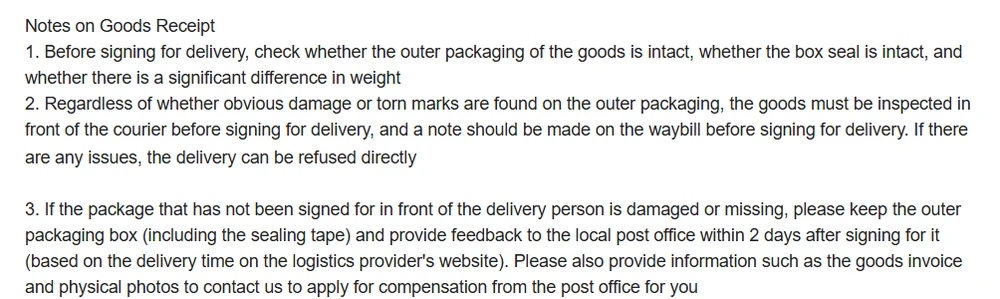
Oopbuy's Receipt Information page is blunt: the normal receipt of the goods marks the end of the entire transportation process, and the company is not responsible for anything that happens after it. Its notes on receiving say the same in different words: after a normal sign-off, in any case, Oopbuy will not take responsibility.
This is why the after-signing limits are so short. A signature without a remark is evidence that the parcel arrived in good order, and every later complaint has to argue against it.
Three checks before you sign
Oopbuy asks you to make three checks before signing. Is the outer packaging intact? Is the box seal intact, meaning the original tape rather than a second layer? Is there an obvious difference in weight? The pages go further and say that, whether or not you see damage, the goods should be inspected in front of the courier before signing.
In a UK doorway that often means a handheld device and a driver with forty more stops. You will not unpack everything. But you can look at all six sides of the box, check the tape, feel the weight and photograph the label before the driver leaves.
A remark on the signature, or a refusal
If something is wrong, Oopbuy describes two options. You can sign with a remark noting the damage, or refuse the delivery outright. A remark keeps the parcel with you and turns your signature into a record of the problem rather than proof that there was none. A refusal sends the parcel back.
Refusal is the stronger statement but carries a cost. Oopbuy's receiving notes say that a parcel returned from abroad for reasons such as no signature or out for delivery leaves you paying the redelivery fee, so refuse only when the damage is plain, and tell customer service the same day.
Safe places, neighbours and pickup shops
UK carriers are good at completing delivery without you. DPD's help page says it will automatically try to leave a parcel with a neighbour if you are not in, and lets you name a preferred neighbour or a safe place. To change the address, it tells you to contact the sender. Collection from a DPD pickup shop needs two pieces of ID.
For an Oopbuy claim, each of these counts as delivered. The compensation page excludes parcels stolen or missing after delivery, so a parcel that vanishes from your doorstep after the tracking says delivered is outside every plan. If you are often out, choose a pickup point or a delivery day you can be there for.
Out for delivery is not delivered
Tracking that says out for delivery means, in Oopbuy's words, that the courier tried but the parcel was not signed for, because the recipient was absent or for some other reason. The parcel now sits with the local post office or courier, and Oopbuy suggests you contact them to learn its status.
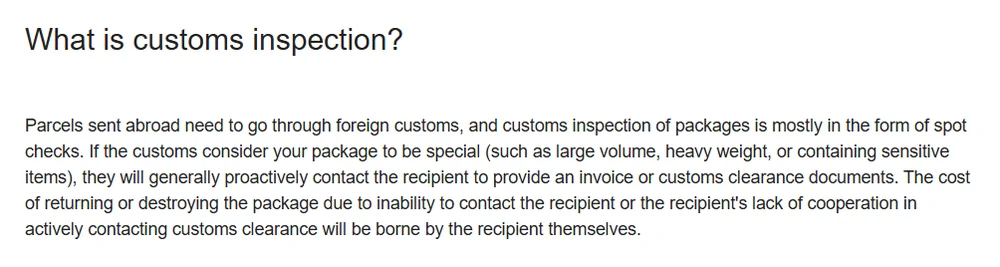
Treat this status as a clock of its own. A parcel left uncollected can be returned, and Oopbuy's foreign-return rule puts the redelivery cost on you. The same applies when customs asks for an invoice and gets no answer: the cost of returning or destroying the parcel is borne by the recipient.
Returned to sender: who pays the second trip
Oopbuy splits returns by where the parcel was turned around. A parcel that fails the domestic security check in China is resent free after Oopbuy contacts you. A parcel that has gone abroad and comes back because of an international security failure, no signature, an unknown address or an unsuccessful delivery leaves you paying for the resend.
The practical lesson for UK addresses: put the full postcode, the flat number and a working phone number on the parcel, and watch the tracking in the final days.
Carriers you are likely to meet
The sixteen UK lines in the estimator on 10 October 2026 hand over to familiar names in their last mile: several Royal Mail lines, two DPD lines, an Evri line listed under its former name Hermes, and EMS. Each carrier has its own process for missed deliveries and for complaints, and for claims it usually deals with the sender rather than the recipient. Evri's FAQ lists receiving, diversion and claims questions on one page.
We do not link Royal Mail or Parcelforce pages here because their sites refused our automated link checks; search their help pages directly. GOV.UK's guidance on goods sent from abroad says that if your parcel does not arrive by the delivery date, contact the parcel or courier company.
Next on the clock: the three limits that start when you sign.
After signing