
Home / What your Oopbuy order costs to reach the UK
What your Oopbuy order costs to reach the UK
Separate item payment, currency conversion, packing and freight before you choose a shipping line.
The full cost has more than one payment
Write a budget before choosing a product. The first payment covers the item and domestic delivery to the warehouse. The second stage covers international freight after you select the stored items. Payment processing, currency conversion, packing, protection and destination charges can sit outside the attractive product-card price.
| Part | What to check |
|---|---|
| Goods and domestic freight | Exact variant, quantity and seller delivery charge. |
| Top-up and conversion | GBP charged, provider fee, and CNY actually credited. |
| Inspection or packing extras | Requested measurements, detailed photos, reinforcement and box removal. |
| International shipment | Packed weight, dimensions, route, declaration fee and optional protection. |
| UK delivery | Applicable tax, duty and carrier charges; read the line’s tax wording. |
The official Service & Fees page, checked 18 October 2026, lists a declaration fee generally around CNY 8 depending on the route. This is not an all-inclusive transaction fee. Check the account’s final itemisation.
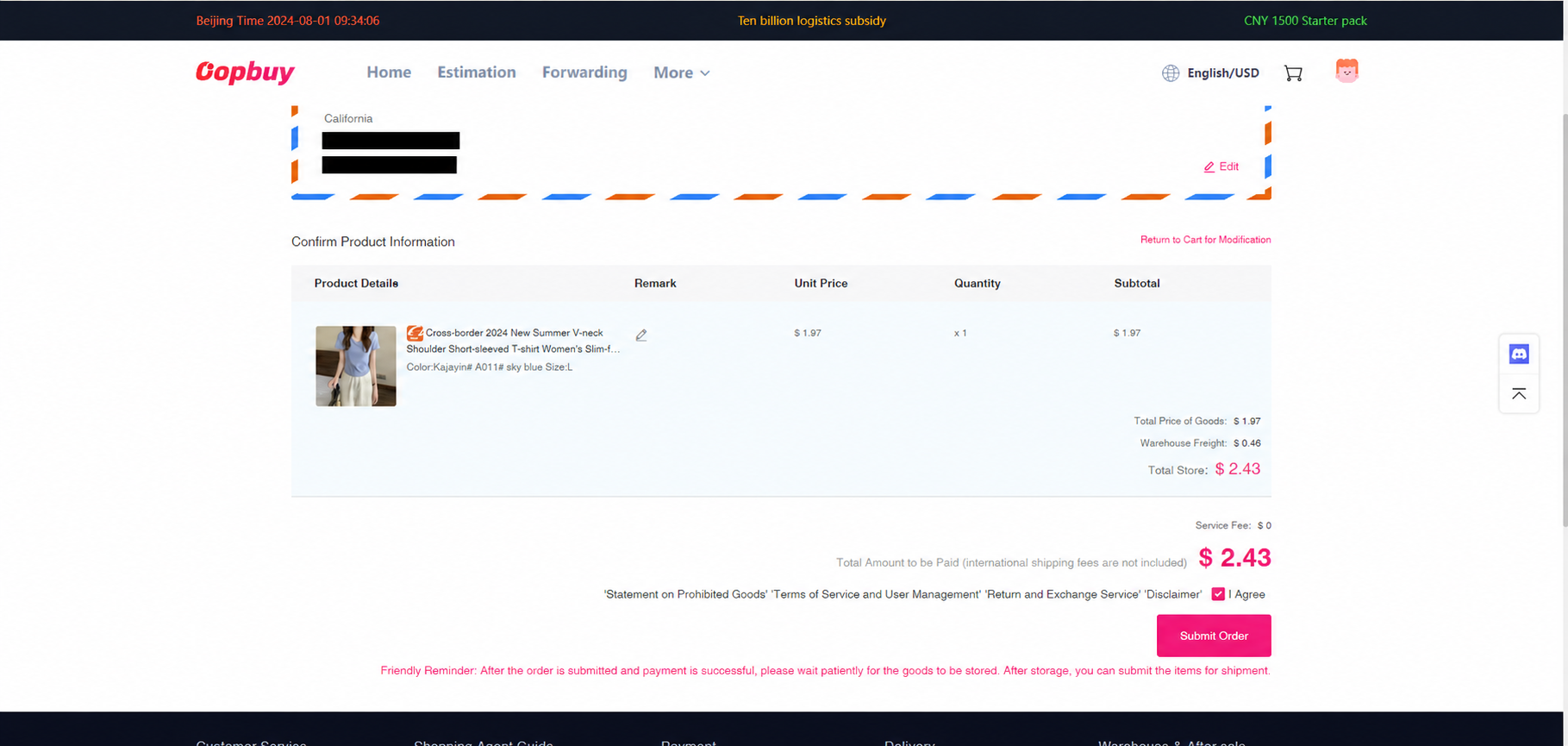
Exchange rate: measure the GBP you actually spend
Use credited balance, not the headline exchange rate. In an invented arithmetic example, if your bank charges £50 and the account receives CNY 420, the effective rate is 420 ÷ 50 = 8.4 CNY per pound. If a separate £1 provider charge follows, use £51: the effective rate becomes about 8.24. Neither is a live Oopbuy quote.
Compare like with like and at the same time: market reference, Oopbuy conversion, provider fee and any bank FX charge are separate. A refund to account balance may not equal a refund to your bank. Check withdrawal conditions before depositing more than the planned purchase needs.
Shipping: choose a line your whole parcel can use
Enter the UK destination and the actual goods category in the estimator before buying restricted items. Perfume, liquids, batteries and some branded goods can narrow the available lines. A route shown for ordinary clothing is not proof it will accept a battery-powered watch.
- Compare destination/postcode eligibility and prohibited goods.
- Read actual versus volumetric weight rules, first-weight increments and size limits.
- Compare estimated transit, tracking handovers and tax treatment.
- Check optional protection, its exclusions, required proof and application process.
- Review the final packed dimensions and charge before settlement.
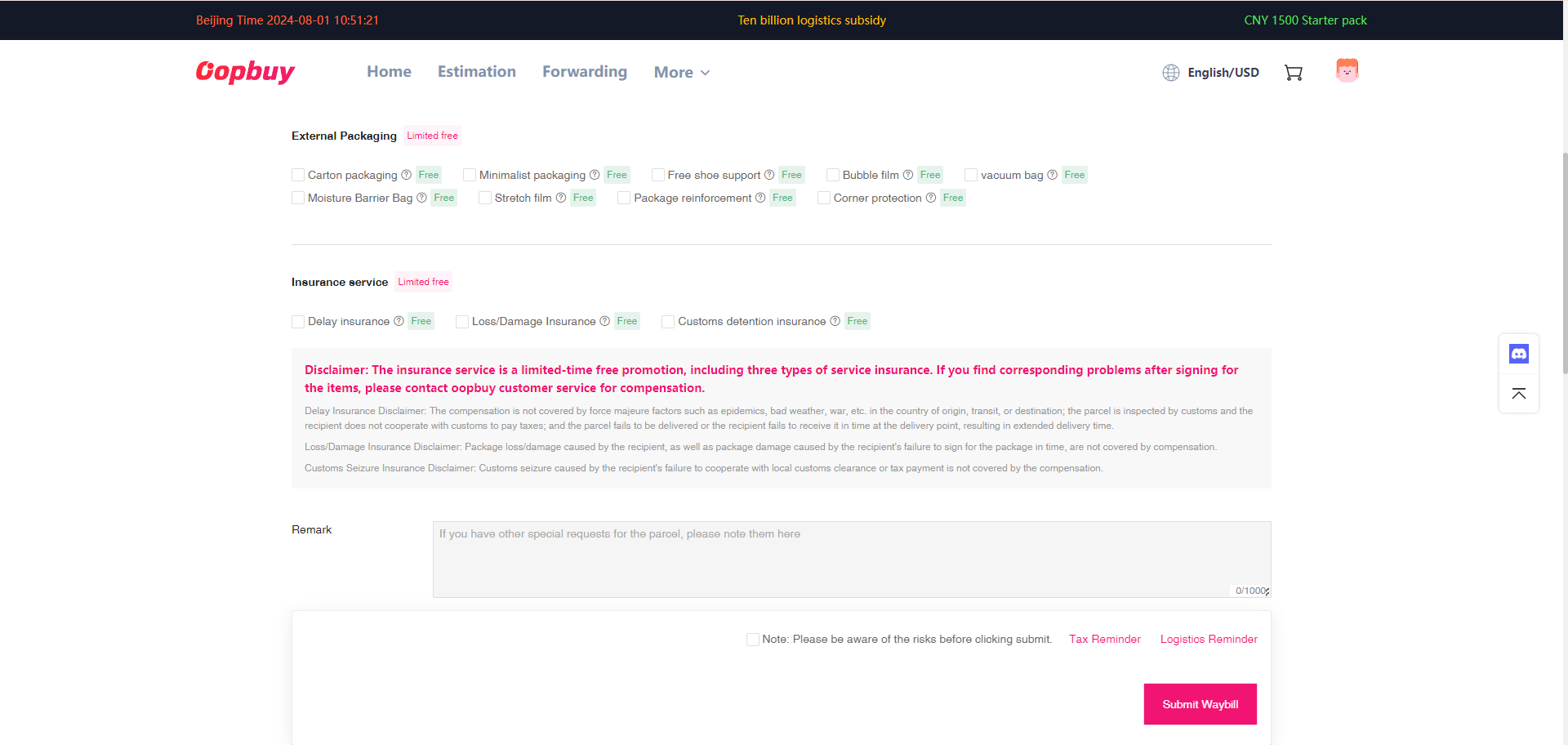
Consolidation can avoid paying repeated base charges, but a bulky coat can increase volume enough to erase that saving. Compare one packed parcel with two sensible parcels using the same current rules; neither option is automatically cheaper.
Actual weight and volumetric weight
Actual weight is what the scale measures. Volumetric weight represents the space the parcel occupies. A line may charge on the higher value, with its own divisor and rounding. For illustration only, a 40 × 30 × 20 cm box has a volume of 24,000 cm³; if a line uses a divisor of 6,000, that gives 4 kg. The divisor is an example, not a rule for every line.
Ask whether rehearsal packing or another measurement service can reduce uncertainty. Removing a box can shrink volume, but check fragile-item protection and what original packaging you need to retain. The estimate still depends on the line available when you submit.
UK customs and the last delivery leg
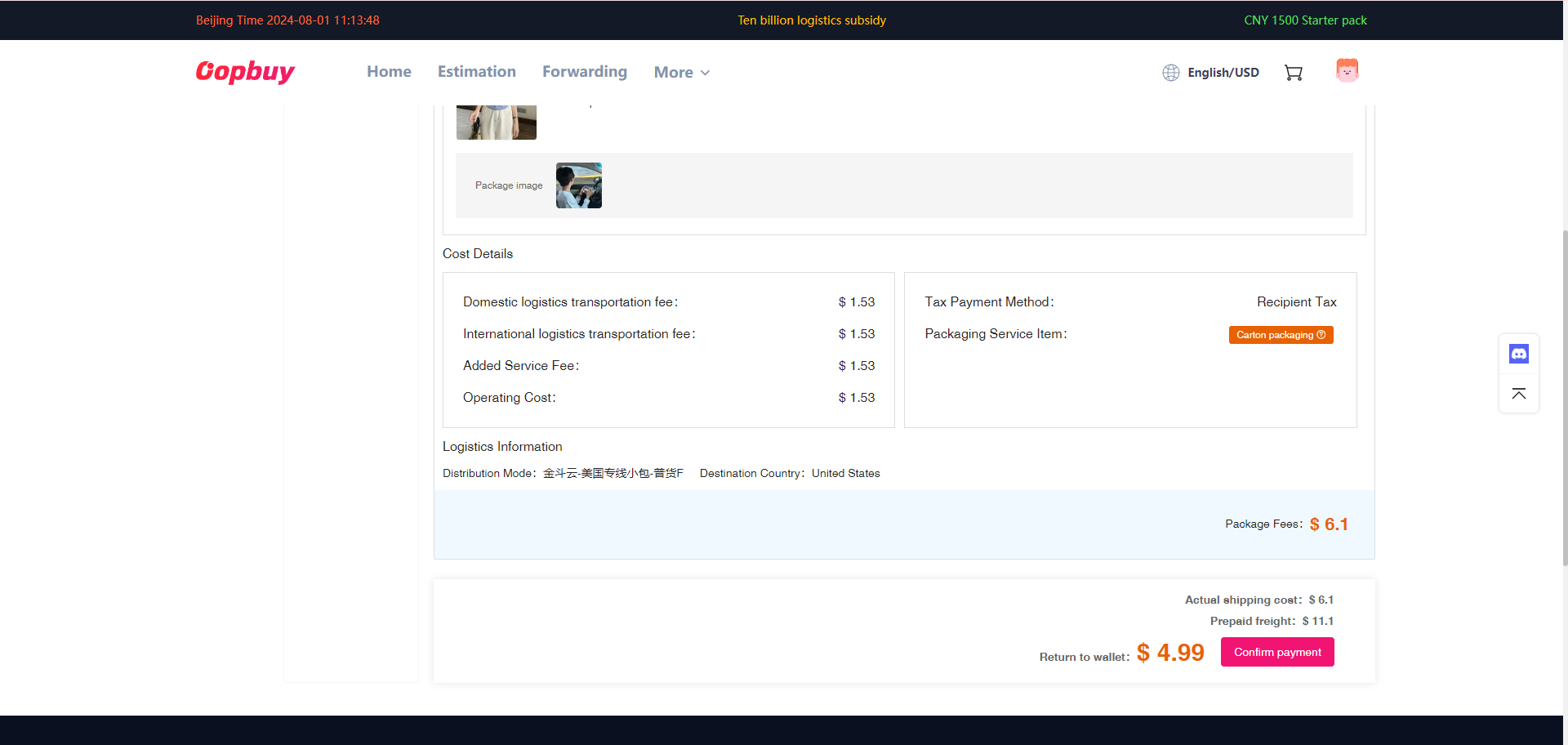
Use an accurate description and value supported by the purchase records. A line label such as “tax free” needs an explanation of who handles any import charges; it does not remove customs checks. Great Britain and Northern Ireland rules can differ. Read the UK customs guide before relying on a threshold.
When tracking changes to a local carrier, save both references. If it reports delivery but you have no parcel, check the carrier’s delivery record and permitted delivery locations promptly, then contact the carrier and Oopbuy. Preserve messages and packaging rather than assuming a calculator date determines compensation.
Review the dated protection-plan notes and use the calendar as a reminder once you have a real dispatch date.